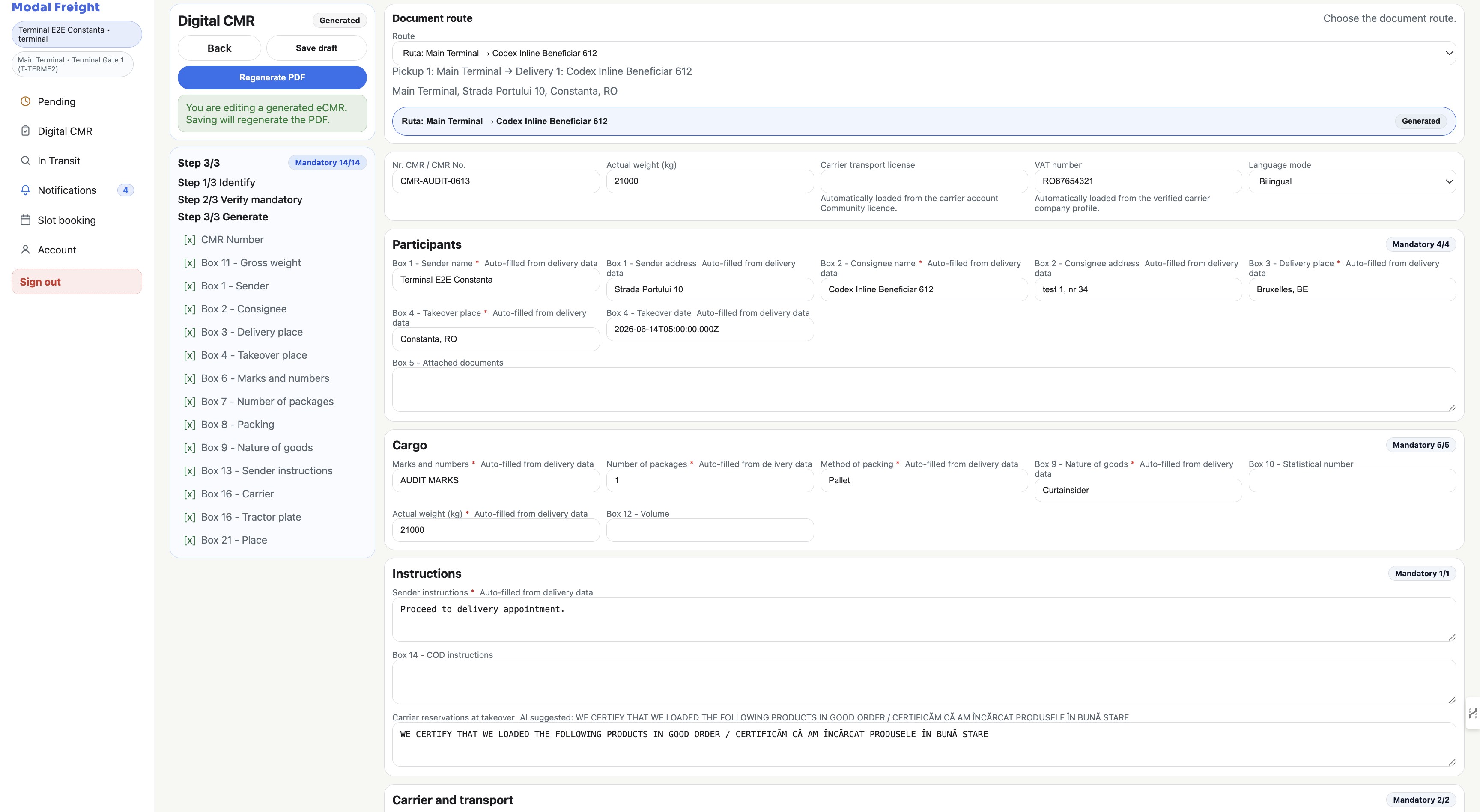
CMR preparation
Known shipment data is already there.
The user checks the delivery-specific information and missing fields instead of starting from an empty form.
Transport document continuity
Reuse shipment data, see what is still missing, generate current documents, and keep the signed or stamped result with the delivery that produced it.
One source, controlled outputs
Two documents, one operational source
The current workflow prepares transport-document files from delivery data and keeps their lifecycle attached to that delivery. Certified eFTI exchange is a separate future capability and is not implied here.
The user checks the delivery-specific information and missing fields instead of starting from an empty form.
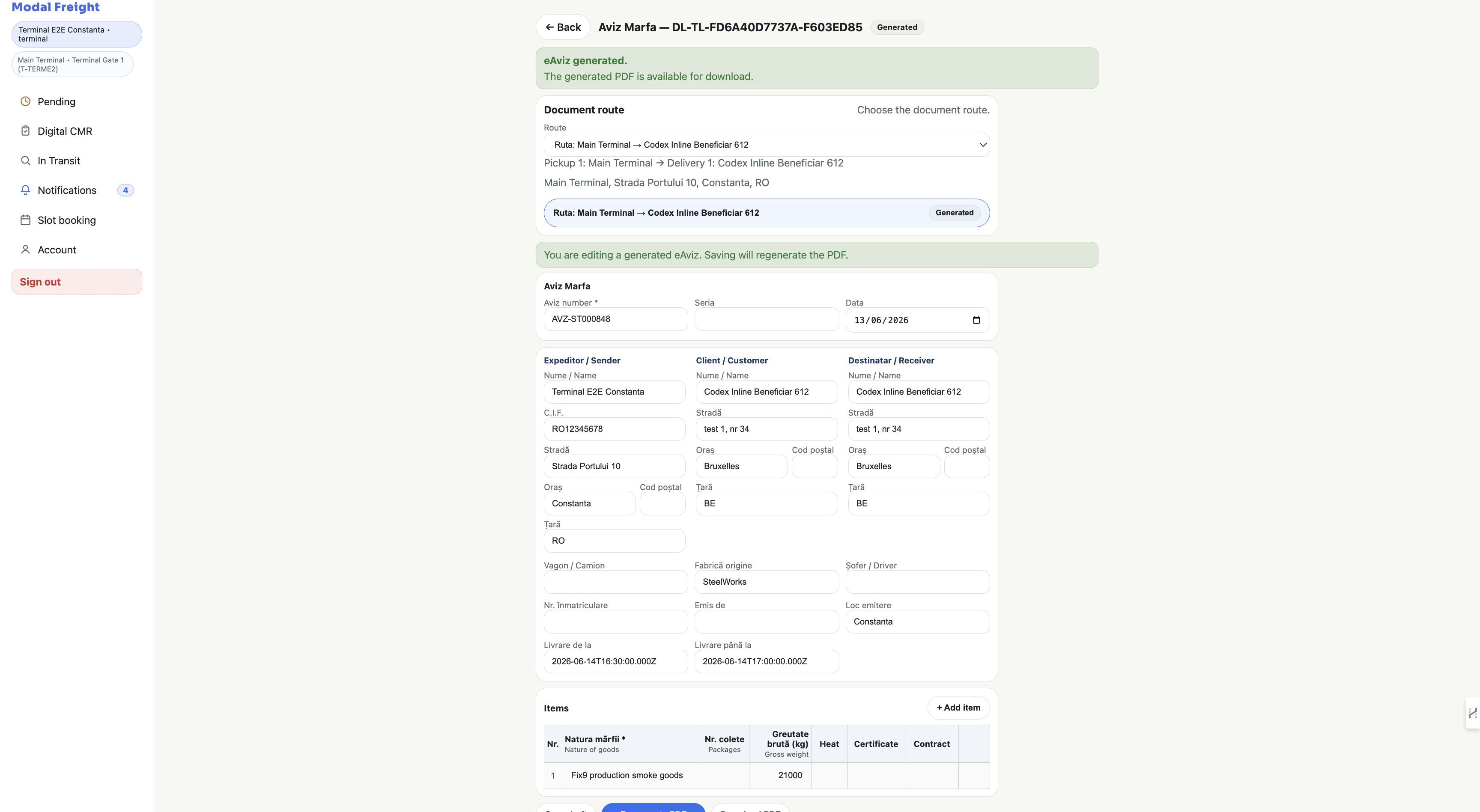
Sender, client, receiver, and goods data remain connected to the operational record instead of becoming a separate copy to maintain.
What the current workflow controls
Document requirements vary by route, goods, customer, and jurisdiction. Modal Freight supports preparation and record continuity; customers remain responsible for confirming the legal documents and formalities that apply to each movement.
Why paper could not be the end state
“I spent years studying the paperwork, signatures, stamps, legal adoption, and the reality of drivers carrying information between companies. My vision was not to digitise one PDF. It was to stop the same shipment being retyped and disconnected every time it crosses an organisational boundary.”
We will show which information is reused, which inputs still need confirmation, and what the current document lifecycle produces.
Test one delivery record