The schedule is distributed across people.
A late change reaches some participants, a blocked gate stays bookable, and the warehouse sees the collision after the trucks arrive.
Dock and gate control
Give every truck a real gate, a real window, and a live status. The plan follows physical capacity, so drivers, cargo, and warehouse teams do not pay for an arrival wave nobody can process.
A common arrival failure
This is an operating pattern, not a customer claim: multiple teams book transport, the yard has fewer usable gates than expected, and the conflict becomes visible only when drivers arrive.
The live yard plan
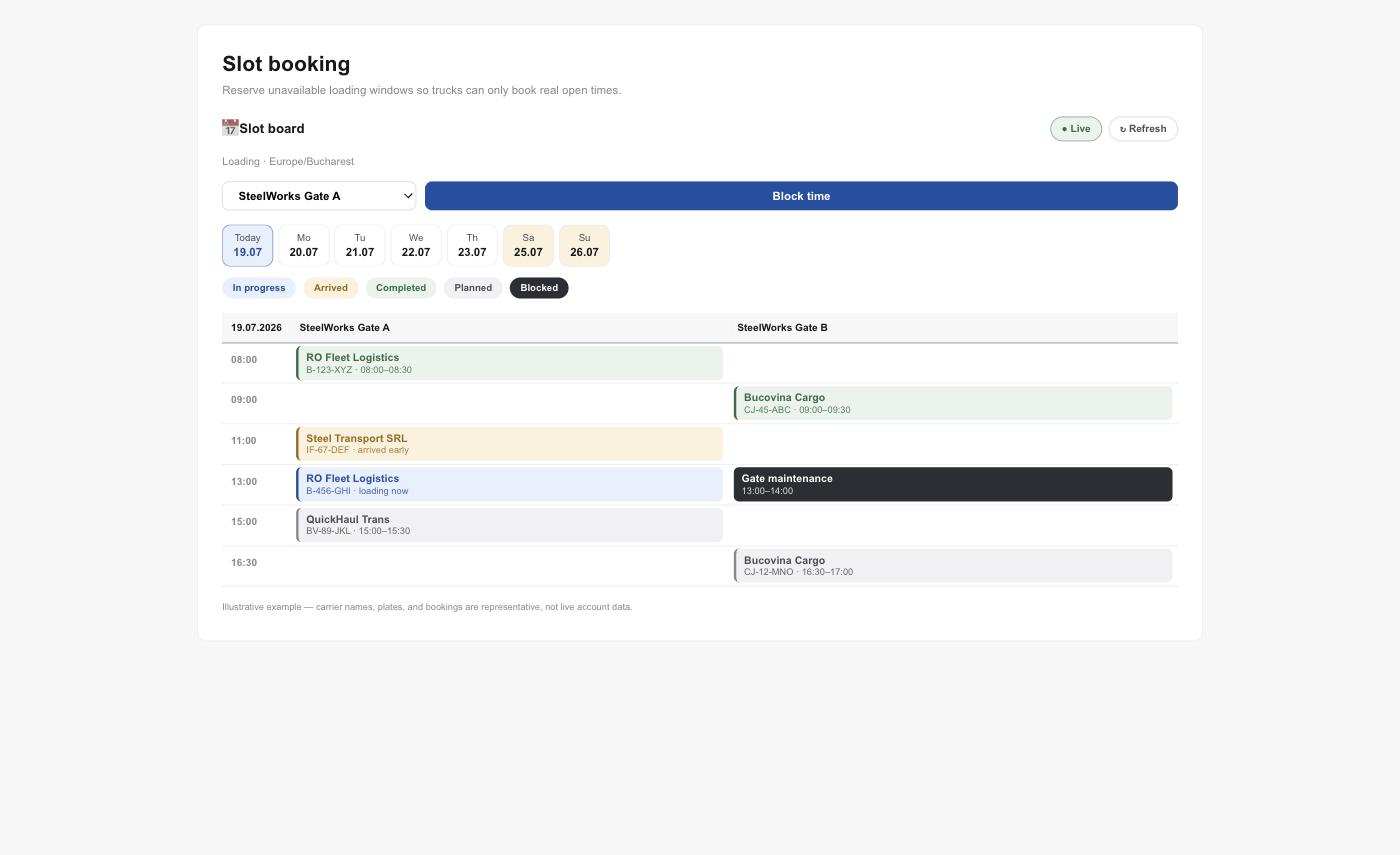
Block unavailable capacity, publish only real openings, and see arrivals, work in progress, completion, and lateness without reconstructing the day from calls.
What changes operationally
A late change reaches some participants, a blocked gate stays bookable, and the warehouse sees the collision after the trucks arrive.
Carriers book real capacity, the yard sees the same plan, and status changes remain attached to the truck and slot that created them.
The operational conviction behind it
“I did not want cargo worth millions to stop moving because ten trucks were sent for the same hour, no real slot had been reserved, and drivers were left waiting. Slot planning is not a calendar feature. It is how transport demand respects the physical yard.”
Bring your gates, shifts, blocked periods, and normal arrival pattern. We will map the operating constraint first.
Map one operating day